
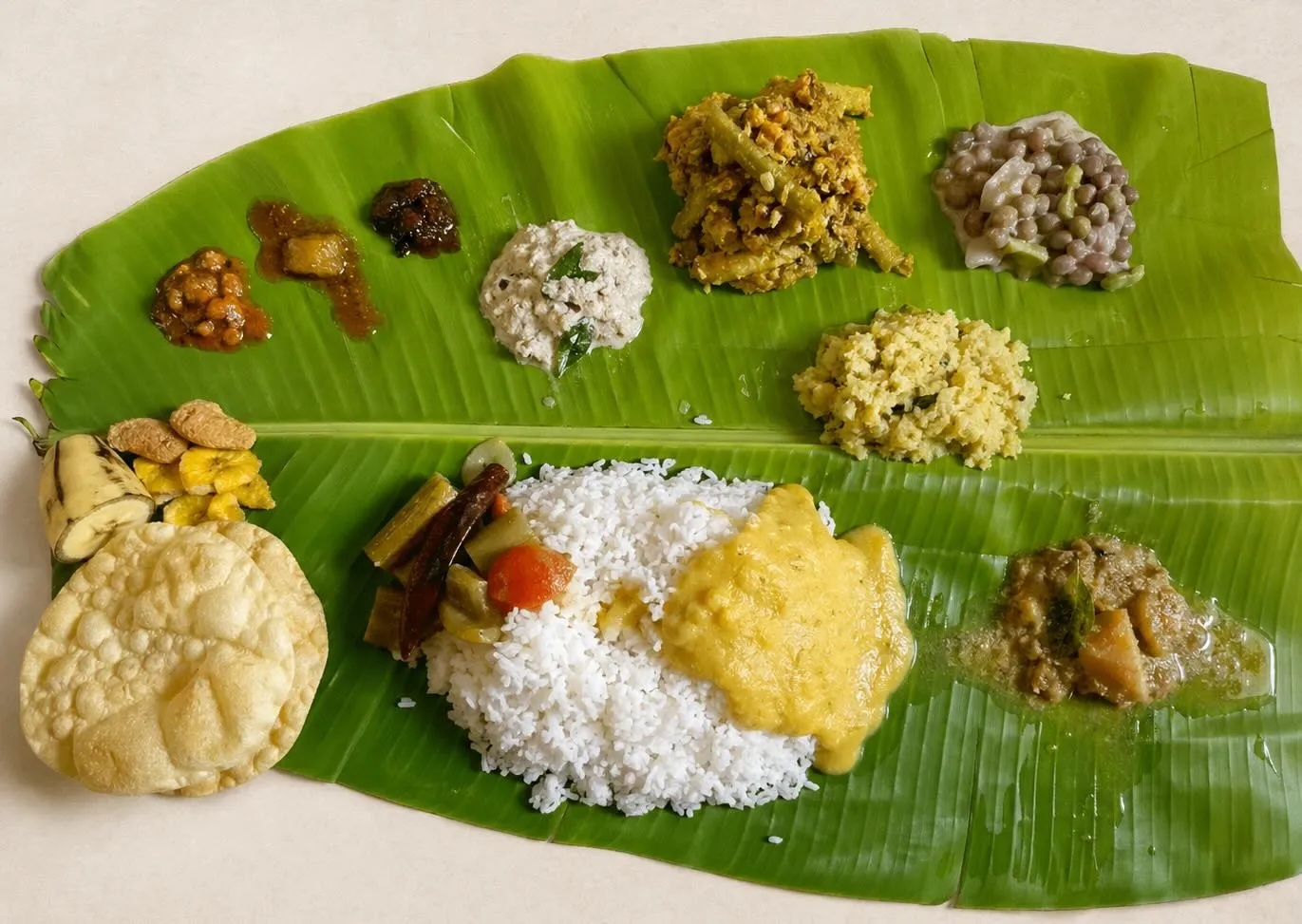
Celebrating Sustainable Gastronomy Day through Kerala’s traditional feast.
Picture this: you sit cross-legged on the floor, facing a large banana leaf spread before you like nature’s own dinner plate. Steam rises from more than fifteen different dishes arranged in a precise pattern — each one telling a story of seasonal abundance, nutritional wisdom, and zero waste. This isn’t just dinner. This is the Kerala Sadhya, and it might just hold a key to eating well in our modern world.
While global cuisine often celebrates the bold flavours of North Indian food, South India’s culinary traditions offer something equally remarkable and less explored. The Kerala Sadhya stands as one of the most sophisticated examples of sustainable gastronomy you’ll find anywhere — a feast that delivers what modern nutrition science now validates as optimal eating.
On June 18th, as the world observed Sustainable Gastronomy Day, it seemed fitting to explore how this centuries-old tradition demonstrates that the future of food might actually lie in the wisdom of the past.
When every dish has a purpose
The Sadhya isn’t random abundance — it’s architectural. Each of its 15–20 dishes serves a specific nutritional function, creating a meal that delivers complete nutrition while following principles modern dietitians now champion.
The foundation. Kerala’s red rice (locally called Matta rice) anchors the meal. Unlike refined white rice, this parboiled grain retains fibre and nutrients, providing sustained energy without sharp blood-sugar spikes. It’s the kind of complex carbohydrate that wellness experts now recommend — and Kerala has been serving it for generations.
The protein powerhouse. Multiple lentil preparations ensure adequate protein. The simple parippu (moong dal), the complex sambar packed with vegetables, and legume-based dishes like erissery create what nutritionists call “protein complementarity” — different plant proteins combining to provide all essential amino acids.
The fats. Coconut appears in many forms throughout the meal — oil for cooking, fresh coconut in preparations, coconut milk in curries. The fat helps absorb fat-soluble vitamins from the vegetables. A caveat for everyday Kerala-style cooking, though: coconut oil is high in saturated fat, so it’s better as one of several oils in rotation rather than the daily default. The Sadhya itself is a feast meal — a once-in-a-while occasion — but if your home kitchen runs on coconut every day, mustard, groundnut, sesame, or rice-bran in the rotation will balance the fatty-acid profile.
The vegetable symphony
What strikes you most about a Sadhya is the sheer variety of vegetables. Avial combines multiple seasonal vegetables with coconut and yogurt. Thoran features different vegetables stir-fried with coconut. Olan pairs ash gourd with cowpeas in coconut milk. Each preparation maximises the nutritional potential of its main ingredient while adding layers of flavour.
This isn’t coincidence — it’s intelligence. Traditional Kerala cooks understood that dietary diversity provides the broadest spectrum of vitamins, minerals, and protective compounds. Modern nutrition research has simply confirmed what they practised intuitively.
The genius of fermentation
Scattered throughout the meal are yogurt-based preparations: kaalan, pachadi, kichadi, and moru curry. These aren’t just for taste — they deliver beneficial bacteria that support digestive health and immune function. Long before “gut health” became a wellness buzzword, Kerala cuisine was systematically including fermented foods in every major meal.
The digestive sequence matters too. The meal incorporates all six tastes recognised in traditional Indian medicine — sweet, sour, salty, bitter, pungent, and astringent. This isn’t culinary showmanship; it’s an understanding of how different flavours trigger different digestive processes and promote satiety.
Zero waste, maximum impact
Here’s where the Sadhya becomes genuinely revolutionary: the banana leaf plate. In an age of plastic pollution, Kerala’s traditional serving method produces zero waste. The leaf is naturally antimicrobial, requires no washing, and biodegrades completely after use. Leftover food scraps can be composted along with the leaf — a completely circular system.
This isn’t primitive. While we struggle with sustainable packaging, the Sadhya shows that the most elegant environmental solutions often come from working with natural systems rather than against them.
What this means for how we eat
The Sadhya offers practical lessons for anyone interested in eating better while treading more lightly on the planet.
Embrace variety over “superfoods”. Instead of seeking the one “perfect” food, the Sadhya achieves nutritional excellence through diversity. Multiple vegetables, grains, and legumes create nutritional synergy no single superfood can match.
Season your eating. The feast changes with seasonal availability, connecting eating patterns with natural cycles. This reduces environmental impact while ensuring peak nutrition and flavour.
Plant-forward without sacrifice. The Sadhya proves that plant-based eating doesn’t mean deprivation. The meal is satisfying, flavourful, and nutritionally complete — addressing common concerns about vegetarian diets.
Mindful abundance. The feast demonstrates that sustainable eating isn’t about eating less — it’s about eating thoughtfully. Abundance and environmental responsibility can coexist when we make intelligent choices.
Beyond the meal
Traditional food systems like the Sadhya remind us that sustainability isn’t just about individual choices — it’s about systems that support both human health and environmental health. The feast connects local agriculture, seasonal eating, minimal processing, zero waste, and social connection into one coherent practice.
This matters because our current food challenges — climate change, nutrition-related diseases, food waste, loss of biodiversity — require systemic solutions. The Sadhya shows what those solutions can look like when implemented at a cultural level.
The path forward
You don’t need to adopt the entire Sadhya tradition to benefit from its wisdom. Start with one principle: prioritise variety over perfection, choose plant foods that connect you to seasons and place, minimise waste in your kitchen, and remember that the best meals nourish both body and community.
The future of food might not require inventing something entirely new. Sometimes it means recognising the brilliance that’s been right in front of us all along, served on a simple banana leaf.